Home Energy Storage Systems in Lebanon: Applications, Reliability & Core Components
Lebanese households have endured one of the worst energy crises in modern history: the national grid provides just 1-3 hours of electricity daily (down from 20+ hours pre-2019), diesel generator costs have surged 300% amid fuel shortages, and blackouts force families to rely on expensive, polluting alternatives like kerosene lamps. Yet, Lebanon’s Mediterranean climate offers abundant solar potential (5-6.5 kWh/m²/day in Beirut, Tripoli, and the Bekaa Valley), making home energy storage systems—powered by three foundational components: inverter, charger, and controller—a lifeline. This guide explores how these systems deliver reliability, cost savings, and energy independence for Lebanese families, optimized for Google search intent and practical relevance.
Lebanon’s Energy Crisis: Why Home Storage Is Non-Negotiable
Lebanon’s energy collapse stems from decades of mismanagement, political instability, and fuel import shortages. For families, the toll is devastating: a typical household spends $300-$500/month on diesel for generators (40% of average income), while frequent outages ruin refrigerated food, disrupt remote work, and endangering families dependent on medical devices like oxygen concentrators. Rural areas like Nabatieh and Baalbek fare worse—many have no grid access at all. A home energy storage system addresses these crises by capturing Lebanon’s intense sunlight via a charger, converting it to usable power with a inverter, and optimizing usage via a controller—turning intermittent solar into a steady, affordable alternative to failing grid and costly generators.
Core Components: Adapted to Lebanon’s Unique Challenges
Each component is engineered to withstand Lebanon’s harsh conditions—humid summers, dusty winters, and erratic energy demands—while maximizing efficiency:
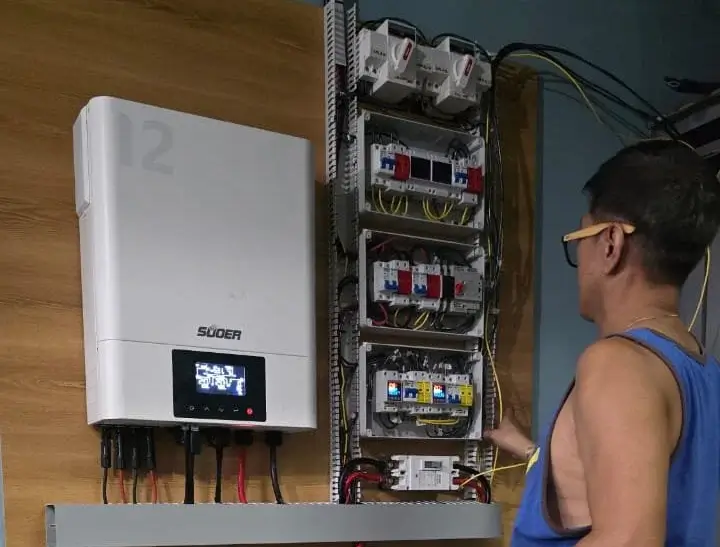
- Inverter: The system’s backbone. Lebanon’s fragmented grid operates at 220V, but voltage fluctuations (±30%) are common when power is available—enough to destroy smartphones, TVs, and medical equipment. A high-quality inverter stabilizes voltage and switches to battery power instantly (0.3 seconds) during outages—a critical feature for Beirut families relying on Wi-Fi for remote work. For off-grid homes, it converts DC battery power (stored solar energy) to AC, powering everything from lights to water pumps.
- Charger: Solar compatibility is essential. Most Lebanese households pair storage with 4-6 solar panels (350-400W each) to capitalize on 9+ hours of daily sunlight. A MPPT solar charger is non-negotiable here—it maximizes energy capture by tracking the sun’s peak power point, boosting efficiency by 20-25% compared to basic PWM chargers. For a typical 2-bedroom apartment in Tripoli, this translates to 7-9 kWh of stored energy daily—enough to power essentials (fridge, lights, chargers) for 12+ hours.
- Controller: The “brain” for survival. It monitors energy usage and prioritizes critical loads (medical devices, fridges) during extended outages. For families using generator backup, the controller coordinates solar storage and generator use—only activating the generator when batteries are low, cutting diesel consumption by 60%. In the Bekaa Valley, farmers use it to schedule irrigation pump operation during midday (peak solar generation), avoiding generator use entirely.
Real-World Applications Across Lebanon
Case studies highlight the system’s transformative impact for diverse Lebanese households:
- Urban Survival (Beirut): A family in Beirut’s Hamra district uses a 7kWh storage system with a 4kW inverter and controller. The MPPT charger paired with 5 solar panels stores energy during the day, powering their fridge, LED lights, Wi-Fi, and a small AC (on low) for 10 hours nightly. This eliminated their $400/month diesel bill and kept their daughter’s online school on track during 2023’s prolonged blackouts.
- Rural Off-Grid Independence (Nabatieh): A farming family in rural Nabatieh had no grid access and spent $350/month on diesel. They now use a 10kWh system with a charger, 6 solar panels, and a inverter. The controller manages power for their olive press, water pump, and home appliances—cutting energy costs by 85% and letting them sell olive oil year-round (previously limited by generator runtime).
- Medical Reliability (Jounieh): A family in Jounieh cares for an elderly relative with COPD, requiring 24/7 oxygen. They use a 6kWh system with a inverter and controller that prioritizes the oxygen concentrator. The MPPT charger ensures batteries stay charged, even during cloudy days, eliminating the risk of life-threatening outages that previously forced emergency hospital visits.
Key Tips for Choosing a System in Lebanon
To thrive in Lebanon’s crisis: 1) Select a inverter with IP65+ protection (resists humidity from Mediterranean summers and dust from Bekaa Valley winds) and high-temperature tolerance (up to 60°C); 2) Prioritize MPPT chargers—critical for maximizing solar capture amid frequent cloud cover; 3) Choose a controller with Arabic or English app support for remote monitoring (essential during fuel shortages); 4) Opt for lithium-ion batteries (8-10 year lifespan vs. 2-3 years for lead-acid, which degrades quickly in humid climates).
As Lebanon slowly rebuilds its energy infrastructure, home energy storage systems—centered on inverter, charger, and controller—are more than a luxury: they’re a lifeline. For Lebanese families, they mean reliable power for health, education, and livelihoods—offering a path to stability amid crisis and aligning with the country’s untapped renewable potential.