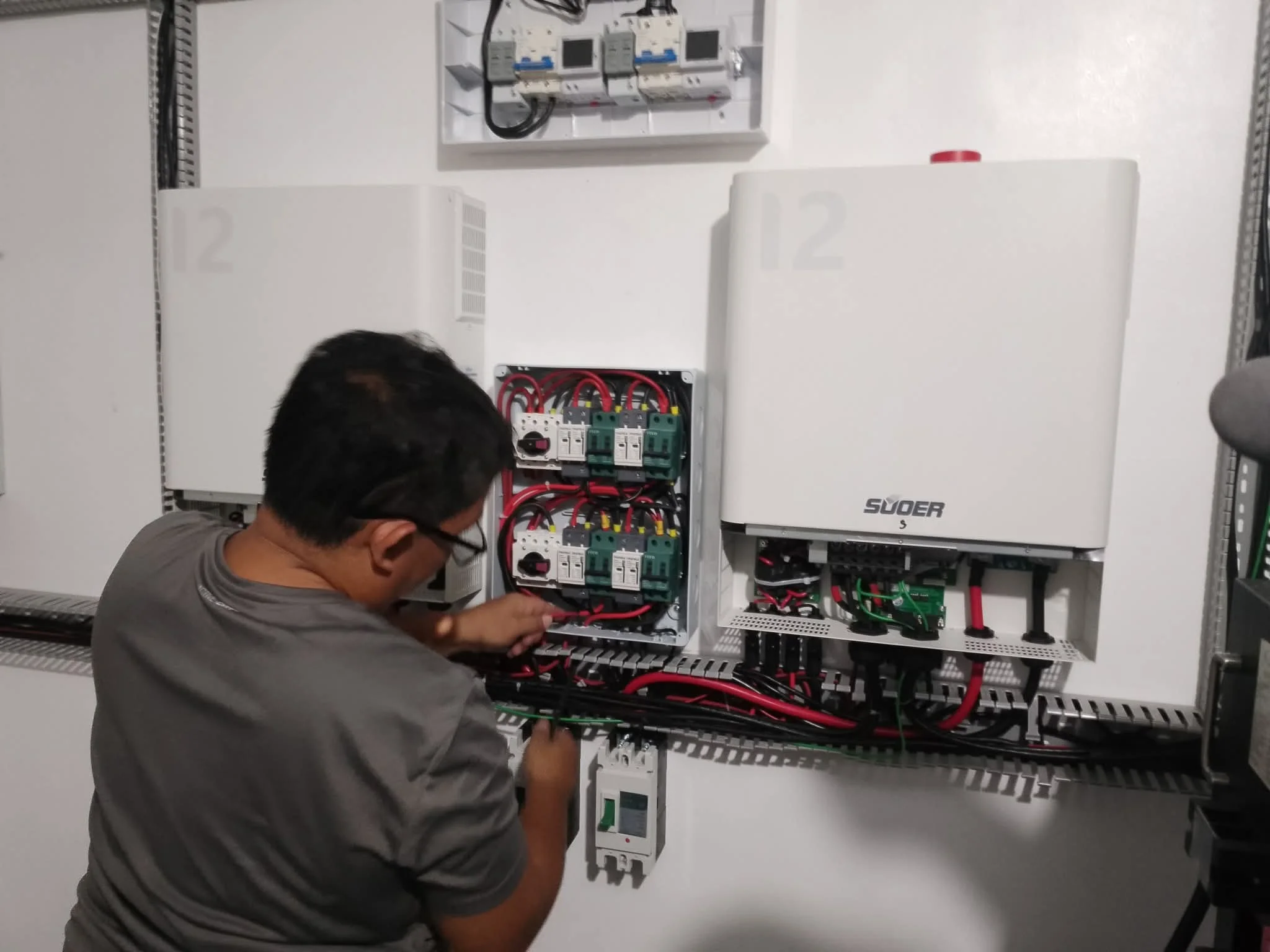
Filipino households face persistent energy challenges shaped by geography and infrastructure: the national grid provides only 18-20 hours of electricity daily on average, with urban centers like Manila and Cebu suffering 2-4 unplanned outages weekly. Rural areas, including parts of Visayas and Mindanao, have less than 60% grid access (per Department of Energy, DOE), while typhoon seasons (June-November) often trigger multi-day blackouts. Families rely on expensive diesel generators ($120-$250/month) or dangerous kerosene lamps as backups—both costly and harmful. Yet, the Philippines’ tropical climate offers abundant solar potential (5-6.5 kWh/m²/day, especially in Luzon and Mindanao), making home energy storage systems—powered by three core components: inverter, charger, and controller—a transformative solution. This guide explores their real-world impact for Filipino families, optimized for Google search intent and practical relevance.
The Philippines’ energy crisis stems from underdeveloped infrastructure, overreliance on imported coal (58% of electricity, per DOE), and climate vulnerability. The National Grid Corporation of the Philippines (NGCP) struggles to meet peak demand, especially during summer (35°C+ temperatures drive AC use) and typhoons (which damage transmission lines). For families, the consequences are severe: children’s modular learning disrupted (75% use tablets for lessons), refrigerated food spoiled, and fire risks from kerosene lamps (responsible for 20% of residential fires, per Bureau of Fire Protection). Diesel generators drain budgets—accounting for 30% of average monthly income. A home energy storage system solves these gaps by capturing sunlight via a charger, converting it to usable power with a inverter, and optimizing usage via a controller—aligning with the Philippines’ Renewable Energy Act (targeting 35% renewables by 2030).
Each component is engineered to withstand the Philippines’ harsh conditions—typhoon rains, high humidity, dust, and grid volatility—ensuring durability and efficiency:
Diverse case studies highlight the system’s transformative impact for families and small businesses:
Optimize for local conditions: 1) Select a inverter with IP65+ protection (resists typhoon rains and high humidity) and high-temperature tolerance (up to 60°C); 2) Prioritize MPPT chargers to maximize solar efficiency amid monsoon cloud cover; 3) Choose a controller with English or Tagalog app support for easy monitoring; 4) Use lithium-ion batteries (8-10 year lifespan vs. 2-3 years for lead-acid, which corrodes in coastal areas like Cebu).
As the Philippines works to strengthen energy resilience and expand renewables, home energy storage systems—centered on inverter, charger, and controller—are more than a luxury: they’re a necessity. For Filipino families, they mean reliable power for education, health, and livelihoods—offering stability amid climate and energy challenges, while aligning with the country’s sustainable development goals.