



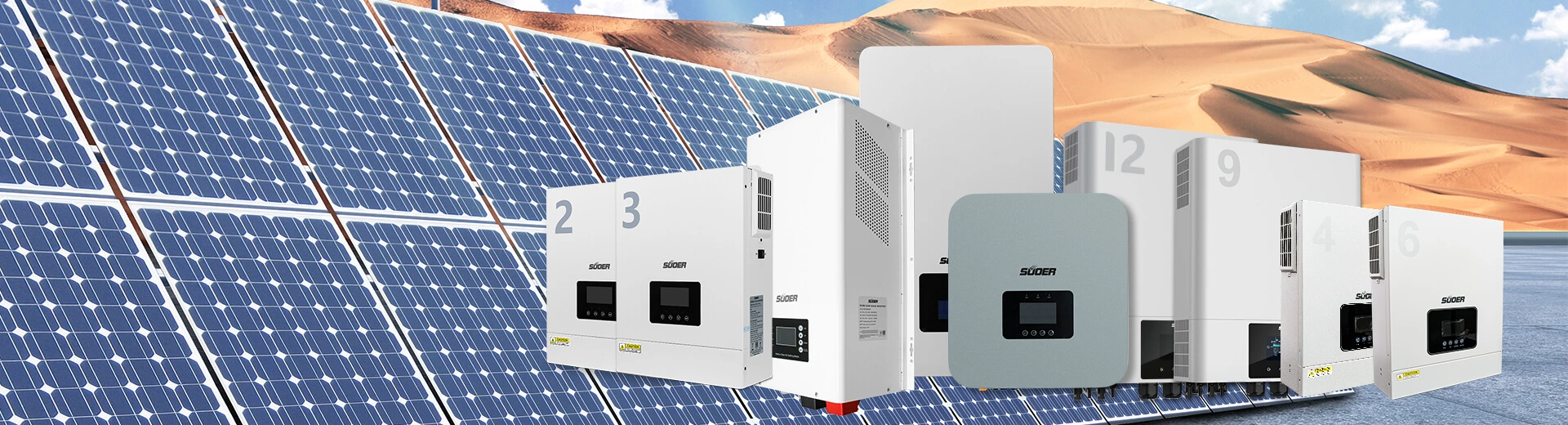


As global renewable energy demand grows, hybrid solar systems are widely adopted. The inverter is core to converting solar DC to usable AC power. The 6000W hybrid solar inverter stands out for high power output, while its IP66 waterproof rating ensures durability in harsh outdoor environments.
Key Advantages of 6000W Hybrid Solar Inverter with IP66 Waterproof
The 6000W hybrid solar inverter with IP66 waterproof combines high power and robust protection, addressing power shortage and equipment vulnerability in harsh environments.
1. IP66 Waterproof & Dustproof: Unmatched Durability
IP66 rating provides full dust protection and resistance to high-pressure water jets, suitable for rain-prone, coastal, and desert areas. It eliminates the need for additional waterproof enclosures, simplifying installation and reducing maintenance costs.
2. 6000W High Power Output: Meets Diverse High-Load Demands
With 6000W continuous output and 12000W+ peak power, it powers high-load devices (residential appliances, commercial machinery). Supporting both on-grid and off-grid modes, it flexibly meets energy needs, reducing electricity bills or ensuring energy independence in remote areas.
3. Integrated Charger & Controller: Efficient Energy Management
Equipped with built-in charger and 99.9% efficient MPPT controller, it forms an all-in-one energy management system. Supporting multiple charging modes and various batteries, it simplifies configuration and enhances energy storage efficiency, ensuring stable power supply in low irradiance.
4. Smart Monitoring & Comprehensive Protection
It features smart remote monitoring (WiFi/mobile app) and comprehensive protections (over-temperature, over-voltage, short-circuit, etc.), safeguarding equipment and ensuring long-term safe operation.
Core Applications of 6000W Hybrid Solar Inverter with IP66 Waterproof
Benefiting from high power, IP66 protection, and versatility, it is widely used in residential, commercial, agricultural, off-grid, and emergency scenarios.
1. Residential Solar Energy Systems
Ideal for large households with high energy demands, it powers all essential appliances. IP66 allows outdoor installation; grid-tied mode earns feed-in tariffs, while off-grid mode provides backup power during blackouts, reducing costs and ensuring energy security.
2. Commercial & Industrial Buildings
Suitable for small-to-medium commercial/industrial buildings, it integrates into solar systems to meet energy needs. IP66 adapts to dusty industrial environments; built-incharger and controller optimize energy management, cutting expenses and achieving sustainability goals.
3. Agricultural Applications
Well-suited for remote agricultural operations (farms, greenhouses, irrigation), it powers pumps, drying machines, and ventilation systems. IP66 ensures durability in outdoor agricultural environments, reducing reliance on diesel generators and lowering costs.
4. Off-Grid & Remote Areas
Forms complete off-grid systems for mountainous areas, islands, and communication base stations. IP66 guarantees reliable operation in harsh weather, providing stable power for daily life and communication equipment.
5. Emergency Backup Power Systems
Serves as reliable emergency backup in disaster-prone areas. IP66 ensures functionality after heavy rain/flooding; it automatically switches to battery power for critical equipment (medical devices, refrigerators), mitigating outage impacts.
System Integration: Synergy Between Inverter, Charger, and Controller
Proper integration of inverter, charger, and controller is key to maximizing performance. Their synergy ensures efficient energy conversion, storage, and distribution, as outlined below:
1. Solar Panel → Controller → Battery
Solar panels generate DC power, which the MPPT controller optimizes to track maximum power point, then charges the battery, preventing overcharging and extending battery life.
2. Battery → Inverter → AC Loads
The inverter converts battery DC to stable pure sine wave AC power (50Hz/60Hz ± 0.2%), compatible with all standard appliances and protecting sensitive electronics.
3. Grid/Mains → Charger → Battery (Hybrid Mode)
In hybrid mode, the built-in charger uses grid power to charge the battery when solar energy is insufficient. Adjustable charging current and optional AGS functionality enhance energy security.
Key Considerations for Selecting 6000W Hybrid Solar Inverter with IP66 Waterproof
Key factors to consider when selecting the 6000W IP66 hybrid solar inverter include the following:
1. IP66 Certification Authenticity
Verify genuine IP66 certification (CE, RoHS, FCC) to avoid equipment failure in harsh environments; check datasheets or manufacturer documents for verification.
2. Compatibility with Batteries and Solar Panels
Ensure compatibility with battery types and solar panel specs; the MPPT controller should have a wide input voltage range (e.g., 60VDC-500VDC) for diverse configurations.
3. Power Output and Surge Capacity
Confirm 6000W continuous output and sufficient peak surge capacity (e.g., 12000W/10s) to handle high startup currents of motors and air conditioners.
4. Smart Features and Monitoring Capabilities
Prioritize inverters with smart features (remote monitoring, real-time data tracking) for easy system management and early issue detection.
5. Warranty and After-Sales Support
Choose products with 5-10 year warranties and comprehensive after-sales support (technical assistance, spare parts) for long-term peace of mind.
Conclusion
The 6000W hybrid solar inverter with IP66 waterproof is a versatile, reliable solution for residential, commercial, agricultural, and off-grid applications. Its high power, durability, and integrated charger and controller maximize solar utilization in harsh environments. Understanding its key attributes helps build efficient, stable solar systems.
It caters to homeowners, businesses, and remote users, offering cost-effective, sustainable energy solutions. Investing in this high-quality inverter supports renewable energy adoption, saving costs and fostering a greener future.
| HYBRID SOLAR INVERTER | ||||
| MODEL | SUN-6K-AH2 | MODEL | SUN-6K-AH2 | |
| PV Input | Battery | |||
| Max. PV Input Power | 9KW | Battery Voltage Range | 40~60V | |
| Max. PV Open Circuit Voltage | 550V | Recommended Battery Voltage | 48V | |
| MPPT Range@Operating Voltage | 80~520VDC | Max. Charging Voltage | 60V | |
| Full Power MPPT Voltage Range | 250-500VDC | Max. Charging/Discharging Current | 120A/120A | |
| Start -up Voltage | 90VDC | Battery Type | Lithium and Lead Acid Battery | |
| Max. Input Current per MPPT | 19A/19A | |||
| Protection | ||||
| Max. Short -circuit Current | 25A/25A | |||
| DC Switch | Yes | |||
| MPPT Tracker/Strings | 2/1 | |||
| DC Reverse Polarity Protection | Yes | |||
| Nominal Input Voltage | 360V | |||
| DC/AC Surge Protection | Type III/Type III | |||
| AC Output(On-Grid) | ||||
| AC Overvoltage Protection | Yes | |||
| Nominal Output Power to Grid | 6KW | |||
| AC Short-circuit Protection | Yes | |||
| Max. Apparent Power to Grid | 6KVA | |||
| Ground Fault Monitoring | Yes | |||
| Max. Apparent Power from Grid | 6KVA | |||
| Anti-islanding Protection | Yes | |||
| Max. Apparent Current from Grid | 26.1A | |||
| Residual-current Monitoring | Yes | |||
| Nominal Output Current from Grid | 26.1A | |||
| Insulation Resistance Monitoring | Yes | |||
| Max. Output Current to Grid | 26.1A | |||
| Peak/Valley Time Setting | Yes | |||
| Nominal Voltage/Frequency | 230V(176V~280V), 50/60Hz, L+N+PE | |||
| General Data | ||||
| Adjustable Power Factor | 0.8leading~0.8lagging | HMI | LCD & APP | |
| THDI | <2% | BMS | RS485; CAN | |
| AC Output(BackUp) | EMS/Meter | RS485 | ||
| Nominal Output Power | 6KW | Communication | WiFi(standard)/ GPRS(opt)/4G(opt) | |
| Max. Apparent Power | 6KVA | |||
| Ingress Protection | IP66 | |||
| Nominal Output Current | 26.1A | |||
| Operating Temperature Range | -25~60°C | |||
| Max. Output Current | 26.1A | |||
| Relative Humidity | 0~95%(Non-condensing) | |||
| Nominal Voltage/Frequency | 230V(176V~238V), 50/60Hz, L+N+PE | |||
| Max. Operating Altitude | 4000m (Derating above 3000m) | |||
| Automatic Switch Time | <20ms | Cooling | Natural | |
| THDu | <2% | Noise Emission | =29dB | |
| Overload Capacity | 110%,30s/120%,10s/ 150%,0.02s | Self-consumption(W) | <10 | |
| Efficiency | Standard Compliance | |||
| Max. Efficiency | 98% | Safety Regulation | IEC/EN62109-1/-2 | |
| Europe Efficiency | 97.5% | EMC | IEC/EN61000-6-1/-2/-3 | |
| MPPT Efficiency | 99.00% | GridRegulation | Europe: EN50549, South Africa: NRS097- 2-1:2017, Belgium: C10/11 | |
| Max. Battery Charge/ Discharge Efficiency | 94.60% | |||


