



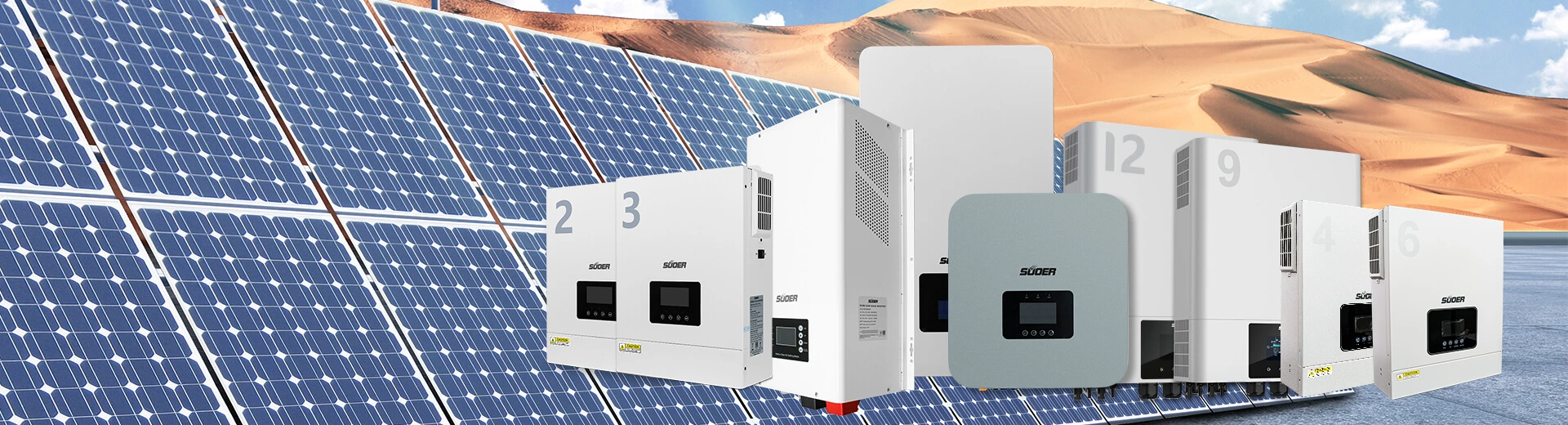


In water management (agriculture, industry, residential, emergency), consistency and efficiency are key. Traditional pumps face voltage fluctuations and high energy use—solved by the water pump inverter. Paired with charger and controller, it optimizes performance and cuts costs, forming the core of smart water systems.
1. Understanding Water Pump Inverters: Core Components & How They Work
A water pump inverter converts DC (solar, batteries, generators) to AC, regulating voltage/frequency to match water demands—unlike fixed-speed traditional pumps.
The charger stores surplus energy (solar/grid) for outages; the controller monitors pressure/flow/batteries, adjusting inverter output. This trio balances efficiency and reliability.
Key benefits: Voltage stabilization, soft start/stop (reduces wear), 30-50% energy savings, and remote monitoring via smart controllers.
2. Primary Applications of Water Pump Inverters: From Agriculture to Industry
The inverter-charger-controller trio adapts to diverse industries. Below are core applications.
2.1 Agricultural Irrigation: The Backbone of Sustainable Farming
Agriculture uses 70% of global freshwater—water pump inverter adjusts speed via controller to avoid waste.
Off-grid, solar charger enables self-sufficiency. Example: Small farm setup cuts 45% energy use vs. diesel and 30% water waste.
Commercial farms use 10-50kW three-phase inverters. Controllers sync with sensors; chargers switch between grid/generators for uninterrupted irrigation.
2.2 Municipal & Residential Water Supply: Reliability for Communities
Municipal/residential systems use inverter with pressure-sensing controller to avoid waste and pressure spikes.
Example: 7.5kW pump cuts runtime 40% (45kWh vs. 75kWh daily) and extends motor life by 2-3 years.
Remote communities use hybrid systems: Solar-inverter setups fill tanks only when levels are low, ensuring self-sufficiency.
2.3 Industrial & Commercial Use: Durability for Heavy-Duty Demands
Industrial 50-200kW inverters resist harsh conditions, paired with robust controllers for load management.
Example: Concrete plant’s 15kW pump uses inverter for 35% energy savings; charger switches to backup generators.
Mining uses explosion-proof controllers and inverters (IP67); chargers ensure continuous dewatering.
2.4 Emergency & Disaster Response: Rapid Deployment for Critical Needs
Disaster response uses portable inverter-charger-controller systems, compatible with multiple power sources.
Post-Hurricane Ian, portable systems supplied 500+ households in 48 hours, adjusting flow for purification/dewatering.
Drought regions use mobile inverter systems—controllers prevent over-extraction; chargers store solar for nighttime use.
3. How to Choose the Right Water Pump Inverter: A Buyer’s Guide
Select a water pump inverter based on pump type, power, application and environment. Below is a key integration guide.
3.1 Match Inverter Power to Pump Requirements
Size inverter 10-20% above pump power (e.g., 5.5kW pump needs 6-7.5kW inverter) to avoid issues.
Three-phase inverters for industrial/large farms; single-phase (≤5kW) for small residential/agricultural use.
3.2 Evaluate Charger Compatibility for Off-Grid Use
Off-grid needs integrated/standalone charger. Prioritize battery voltage, charging current and renewables compatibility. MPPT solar chargers boost efficiency 15-20%.
3.3 Prioritize Controller Features for Smart Operation
Choose controller by use: Irrigation (moisture sensors); municipal (pressure sensors); industrial (remote monitoring).
Smart controllers with app sync enable remote management—ideal for large-scale/multi-location setups.
3.4 Consider Environmental Durability
Outdoor use needs IP65+ inverters/chargers/controllers; IP67 for submersible areas. Cold-start (-20°C) and cooling systems for extreme climates.
4. Common FAQs About Water Pump Inverters
Concise answers to key questions about water pump inverters, chargers and controllers.
Q1: Can a water pump inverter work with both AC and DC pumps?
Most inverters work for AC pumps; some handle DC pumps as controllers. AC-powered DC pumps need inverter + charger (if storing energy).
Q2: How much energy can a water pump inverter save?
30-50% energy savings vs. fixed-speed pumps (up to 60% for industrial variable demand). Example: 7.5kW pump cuts daily use by 40%.
Q3: Do I need a separate charger for my off-grid water pump inverter system?
Modern inverters have integrated chargers (small/medium setups). Large off-grid needs standalone MPPT chargers.
Q4: How long do water pump inverters, chargers, and controllers last?
Lifespans: inverters 10-15 years, chargers/controllers 8-12 years, batteries 3-7 years (with maintenance).
Q5: Can a water pump inverter be used with solar panels?
Yes—solar-inverter systems are off-grid staples. Setup: Panels + solar charger + inverter + controller. MPPT chargers maximize efficiency.
5. Conclusion: Why Water Pump Inverters Are Essential for Modern Water Management
The water pump inverter-charger-controller trio is indispensable for efficient water management, cutting energy use and adapting to diverse power sources.
Prioritize inverter-pump compatibility, charger features (off-grid) and controller functionality. High-quality systems lower costs and boost sustainability.
For farmers, engineers or relief workers, the right water pump inverter transforms water management. Contact a supplier for tailored solutions.


